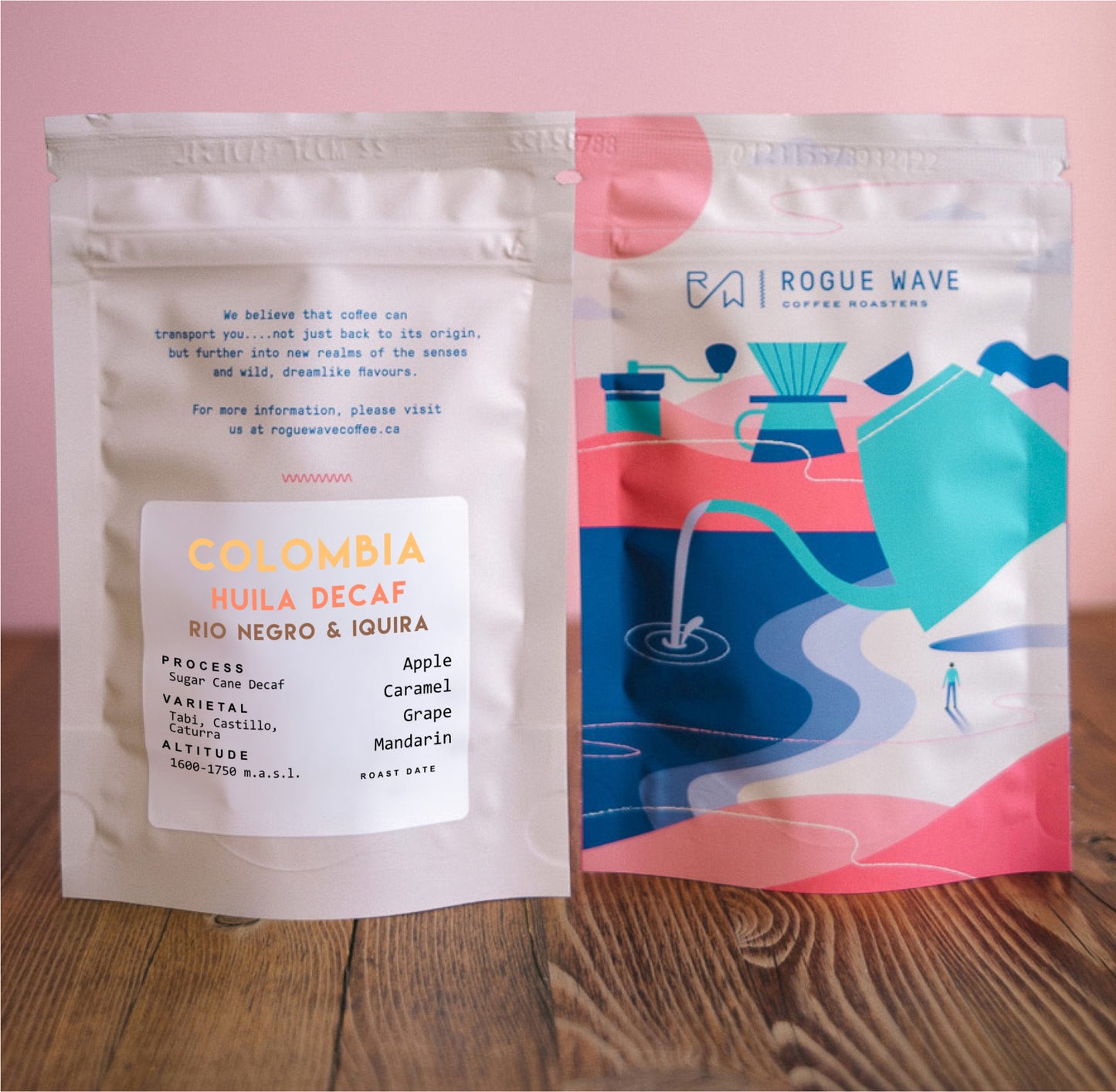





The 60-70 producers that have contributed to this regional lot live in the charming towns of Tesalia and Teruel.
The department of Huila borders Tolima, and it’s the highest-producing region in the country. Huila boasts a chain of volcanoes, the Nevado de Huila, which historically has enriched the soils of the region, creating ideal growing conditions for coffee. Huila has its own designation of origin, and it produces coffees renowned for their bright acidity, balanced body, and rich sweetness.
This coffee is decaffeinated at the Descafecol plant in Colombia using the EA method. EA, or ethyl acetate, is a substance that naturally occurs in many fruits and vegetables, including sugarcane. Colombian sugarcane is used to produce EA, which is then combined with mountain spring water and used to decaffeinate the coffee.
Here’s how the process works:
The coffee is placed in a silo and first steamed to remove the silverskin. The coffee is moistened and then placed in the sugarcane EA solution. In a chemical reaction, the caffeine is removed as the EA circulates through the beans. Then, the coffee is steamed once again to remove any residual EA. The coffee is dried and then cooled down to room temperature once again. It is polished and then finally placed in bags for shipping to its final destination. This washed process preserves the natural flavor and quality of the coffee while removing 99.9% of the caffeine!
Recommendation:
Rest time: 10+ days
Espresso: 1:1.9-2.2, 90C, 25-27s
Filter: 1:15-16, 90c